- Oracles connect blockchain applications with external information.
- Data quality and data delivery are separate concerns.
- An on-chain record does not erase the origin of its inputs.
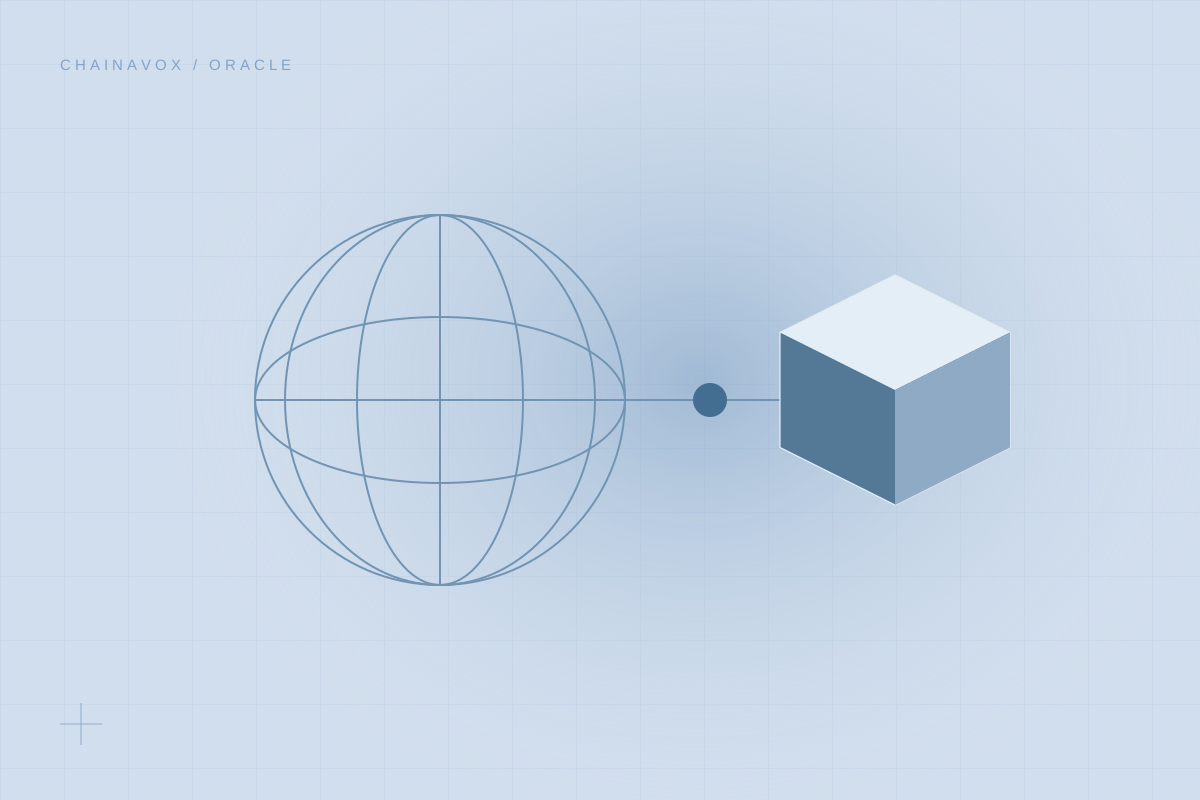
A blockchain application may need information that its own network cannot directly observe. That gap is the reason oracles exist.
The missing input
Ethereum's oracle documentation explains that smart contracts cannot access external data by themselves. An oracle provides a mechanism for bringing outside information to on-chain applications, or communicating in the other direction. [1]
Imagine a program that needs a weather observation to update a record. The blockchain can execute the agreed logic, but it does not independently stand outside and measure the weather. Someone or something must provide that observation.
Delivery is not the same as truth
The mechanism needs an answer to at least two different questions: how is the data transported, and why should that data be trusted? Using more than one source can change the assumptions, but it does not remove the need to understand them. Oracle designs differ in how they source, aggregate and make information available. [1]
For a reader, this is where an abstract claim such as “trustless automation” needs unpacking. Which part is independently checked by the network, and which part depends on an external observation?
Follow the information chain
A useful report identifies the original source, any transformation of the information, the update interval and what happens when the information is unavailable or disputed. These questions apply well beyond cryptocurrency: any automated decision can be affected by the quality of its inputs.
The takeaway is not that external data makes blockchains pointless. It is that the boundary matters. A system may reliably agree that a particular value was submitted without independently proving that the value accurately describes the world.
Whenever a project brings a real-world claim onto a blockchain, keep that distinction in view. The record, the source and the interpretation each deserve their own explanation.
Sources & further reading
Start with the original material. These sources support the explanations above.
Sources checked Oct 1, 2026.Prepared with AI assistance using the linked public sources. This article provides background information, not first-hand reporting. Report a correction.